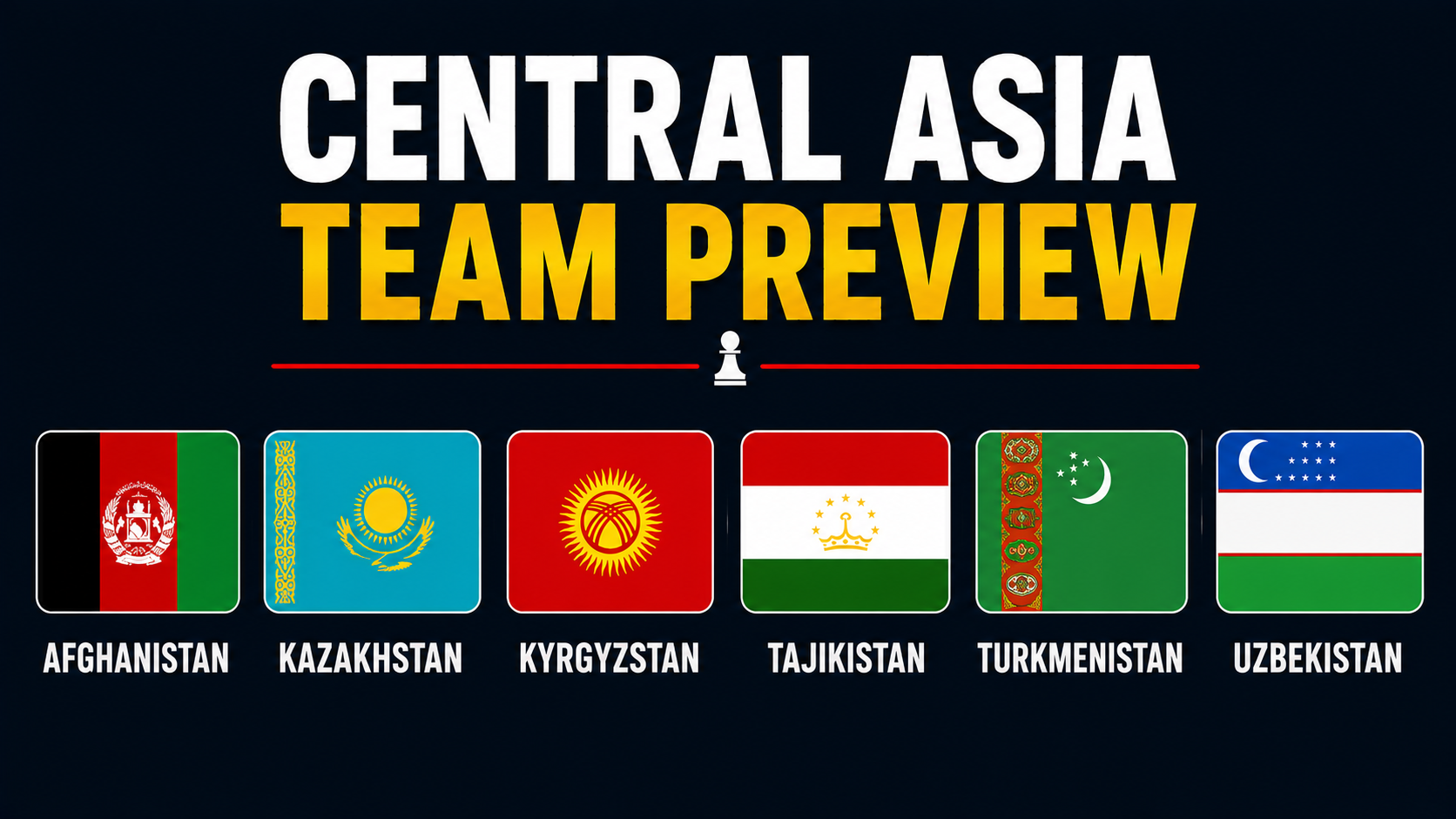
# Uzbekistan's Olympiad Squad Signals Central Asian Chess Dominance
Javokhir Sindarov stands alone at the 2026 Olympiad. His 2777 rating surpasses every other player competing in the Central Asia qualifier, including Arjun Erigaisi of India, who has spent the last two years among the world's elite. Uzbekistan sent him and four fellow grandmasters as their top Open team, leveraging the host nation privilege to field three complete squads in both Open and Women's sections.
This is not ceremonial roster padding. The Uzbek federation chose quality. Sindarov, now 24, has transformed from a promising junior into a genuine threat at the elite level. His presence at 2777 anchors a team that should dominate the Olympiad's Central Asian round. The second and third Uzbek squads will face different expectations, but the top team's composition signals clear intent: qualify for the Chess Olympiad proper with a statement.
The decision to field three teams in each section reflects confidence bordering on ruthlessness. Uzbekistan has the depth to do this without compromise. Kazakhstan and Kyrgyzstan will compete here too, but the talent gap favors the host convincingly. When one nation controls the rating ceiling by 30+ points, the arithmetic becomes simple.
What matters for the wider tournament? Uzbekistan's qualification is virtually assured. The real competition will determine seeding and momentum heading into the next round. Teams that survive Central Asia face stronger opposition in subsequent qualifiers. Uzbekistan's top squad faces none of that pressure. They play for confirmation, not survival.
Sindarov's individual rating carries extra weight. In team competitions, rating-based pairing systems and tie-break procedures often hinge on aggregate rating and board strength distribution. A 2777 player functioning as board one is nearly unbeatable against regional opposition. Even if teammates underperform relative to rating, Sindarov's board will rack wins that drag his team toward victory.
The Uzbek women's section also benefits from hosting. Female players from Central Asia, while improving, lack the concentration of talent available in the Open divisions. Uzbekistan fields three women's teams, which further suggests the federation identified enough qualified players across both genders to commit fully to this event.
This setup creates a two-track Olympiad. Uzbekistan's top squad will cruise. Every other Central Asian team competes for the remaining qualifying spot or spots available. The gap between first and second place could be substantial. That disparity will reshape how subsequent qualifiers evaluate these nations' actual strength. A 20-point victory margin tells you something different than a 40-point margin.
Sindarov's rating peak here does not mean he remains untouchable. The Olympiad format tests consistency and team resilience, not just individual brilliance. But entering as the tournament's highest-rated player, representing the host nation, with four grandmaster teammates surrounding him, gives Uzbekistan an architecture built for success. They will not waste it.