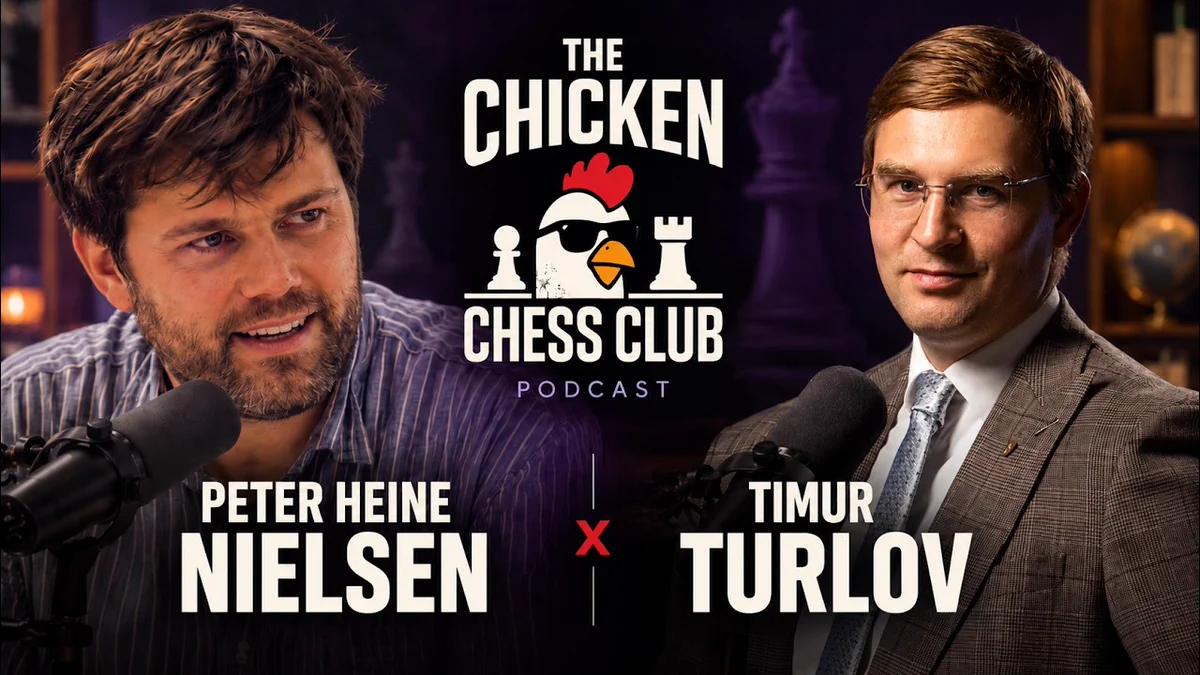
# Turlov's Chicken Chess Club Interview Exposed Real Questions About Substance
Timur Turlov showed up. That alone counts for something. The Chess.com executive sat down with Chicken Chess Club hosts Peter Heine Nielsen and others to face a skeptical chess community directly. But between the confident delivery and the willingness to engage, something crucial went missing. The answers didn't match the confidence.
This matters because Turlov's appearance was framed as accountability. Chess.com commands enormous power in online chess. The platform sets rules, doles out bans, and shapes how millions of casual players experience the game. When the public asks hard questions, they deserve hard answers. They got generalities instead.
Consider the pattern. Nielsen posed direct questions twice. Both times, Turlov pivoted. He didn't deflect with obvious dodging. He spoke at length. He sounded reasonable. But he answered a different question than the one asked. This is the danger of good-faith appearance theater. It looks like transparency. It reads as engagement. The substance tells a different story.
The chess community has legitimate grievances about Chess.com's moderation, account closures, and ban policies. Players banned without clear explanation. Accusations of bias in enforcement. Questions about how the platform polices stronger players versus casual ones. These aren't edge cases. They happen regularly enough that Reddit threads accumulate hundreds of comments from frustrated users.
Turlov didn't create this skepticism from nothing. Chess.com's decisions have generated real controversy. Hans Niemann's accusations against Magnus Carlsen. The platform's handling of various high-profile bans. The opacity around how their engine-cheat detection works. None of that disappears because the CEO shows up on a podcast.
The interview format itself created an impossible dynamic. Chicken Chess Club hosts operate in a space somewhere between friends and journalists. They want good content. They want access. Full-bore hostility kills both. So there's built-in incentive to accept non-answers wrapped in friendly language. The format rewards confidence over clarity.
What happens next matters more than what was said. If Chess.com implements concrete policy changes, clearer ban appeals, or transparent enforcement criteria, this interview becomes a turning point. If nothing changes, it becomes what it appears to be. Window dressing.
The chess community watches closely. They've seen corporate accountability theater before. They'll know the difference between a CEO addressing concerns and a CEO appearing to address them.