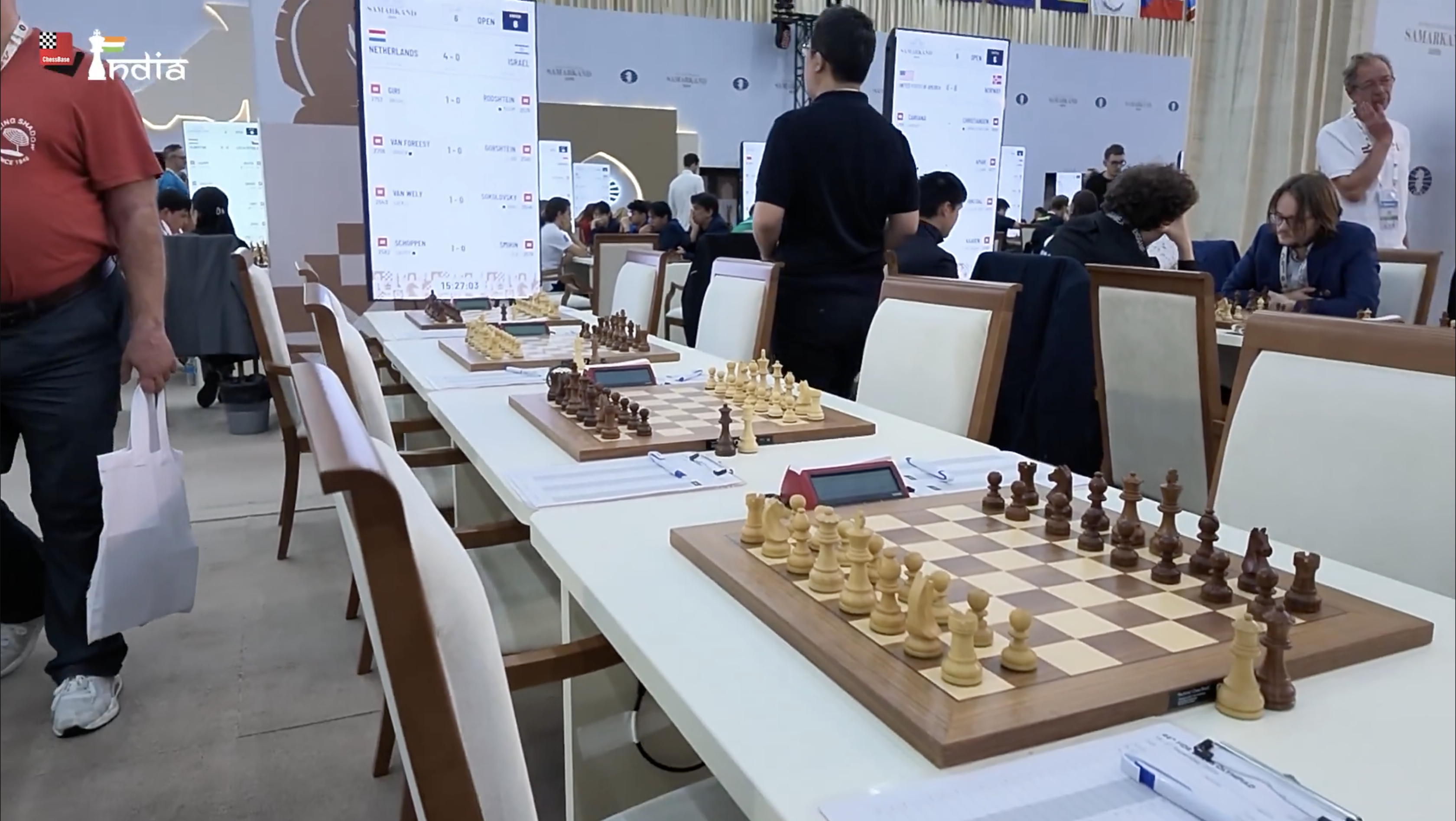
Israel's Open and Women's teams lost their round six matchups by forfeit at the Chess Olympiad after negotiations over Yom Kippur scheduling broke down. The holy days fall on September 20 and 21, creating a direct conflict with the tournament calendar that neither side could resolve.
This is the second consecutive round where Israel's participation hinged on accommodation. In round five, their opponents voluntarily shifted start times. Singapore's Open team and Colombia's Women's squad both agreed to earlier pairings, allowing Israeli players to complete games before the holiday's evening observance began. That flexibility worked because it cost the opposing teams nothing but a clock adjustment.
Round six told a different story. Israel's opponents refused to budge on timing. A forfeit means two things for the Israeli squads. One, they lose rating points and tournament points automatically. Two, their rating calculations suffer from having zero resistance. An opponent who shows up but loses a quick game can recalibrate their performance. A forfeit is simply a loss recorded against a phantom opponent. Neither the Israeli players nor their opponents gained useful data.
The deeper issue here is structural. Chess Olympiads run on rigid schedules. Thirteen rounds unfold in sequence across two weeks, usually with one rest day. The federation hosting the event and FIDE coordinate pairings months in advance. An athlete observing a religious holiday that lasts a full calendar day cannot simply ask round six to start at breakfast time without cascading effects on every other pairing that round.
Israel requested flexibility twice. They got it once. The second refusal suggests either that the opposing team had logistical constraints the first opponents did not, or that there is limited appetite across the broader tournament to keep making exceptions. Singapore and Colombia set a precedent. Once one team does it, others expect the same treatment or resent the unequal burden.
This highlights a recurring tension in elite chess. The game has always moved through Jewish players, and Yom Kippur conflicts happen every few years at major events. Some tournaments have historically held no rounds during High Holy Days. Others expect players to choose between religious observance and competition. Israel's federation clearly cannot control this. They can only negotiate per round, and negotiations fail when opponents decline.
The forfeit costs Israel two critical points in a tournament where every half-point shapes the final standings and the team's rating performance. It also sets no precedent for future Olympiads unless FIDE and host federations begin building scheduling flexibility into the tournament structure itself. Right now, accommodation depends on the goodwill of opponents who face no penalty for refusal.