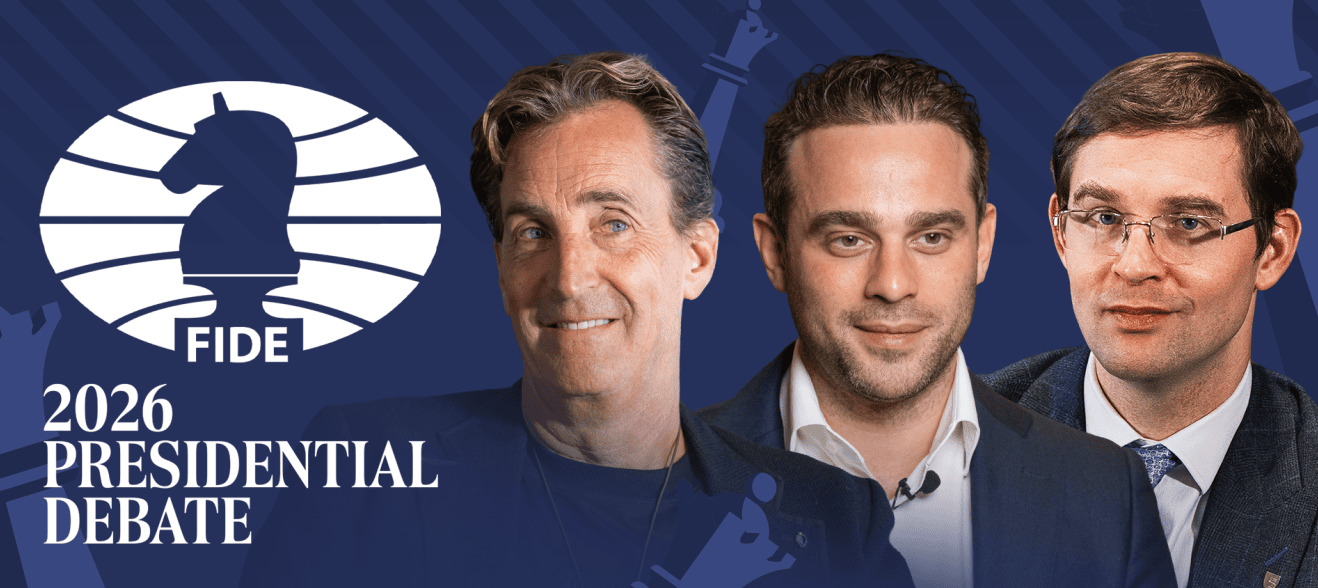
FIDE finally scheduled the moment when its three presidential candidates will face public scrutiny. On September 24 in Samarkand, just two days before voting, the federation will host a Q&A session where accredited journalists can grill the contenders on their vision for chess' global governing body.
The setup is straightforward. Moderator Charlize van Zyl will run a 60-minute session on the Olympiad's Main Stage starting at 16:00. Each candidate gets roughly three minutes to pitch their platform. Then the real test begins: open questioning from the press.
This is overdue. Presidential elections matter. They set federation priorities, budgets, and tone. Yet FIDE's leadership races historically happen in backrooms, with delegates voting on platforms most of them haven't properly examined. A public Q&A won't fix everything, but it forces candidates to articulate positions on camera and answer challenges they can't control.
The unspoken tension here is whether all three will actually show up.
Chess politics runs deep. Candidates sometimes skip media opportunities to avoid traps or difficult questions. A no-show sends a message too, though usually the wrong one. In September 2024, when FIDE held its last major congress, not every player or administrator who said they'd appear actually did. Standards slip when stakes are high and questions are unpredictable.
The federation also needs to define what it's asking these candidates. Is the focus the 2024 World Championship cycle? Women's chess development? Anti-doping protocols? Digital chess governance? Online cheating detection has exploded as a topic. So has the Elo inflation debate. Rating inflation doesn't sound like a presidential platform, but it shapes tournament structures and player incentives.
Samarkand matters for another reason. The 2024 Olympiad is the stage. Hundreds of federation delegates will be in the city. This Q&A isn't some sidelined forum, it's integrated into the Olympiad's formal structure. Media accreditation means journalists covering the world's biggest chess event will be in the room, equipped with questions that matter to players worldwide.
The format's three-minute opener is tight but fair. It forces clarity. Long-winded candidates will signal weakness. Sharp ones will land their message immediately.
Real accountability will depend on who asks the questions and how they press follow-ups. If media members focus on safe topics or softball challenges, this becomes theater. If they dig into FIDE's actual failures, organizational structure, and where money goes, the session could reshape how delegates vote.
The clock is ticking. Two days between Q&A and the actual vote gives delegates barely time to absorb new information, let alone shift their positions. That's how FIDE has always worked, but maybe this time the public record will matter more.