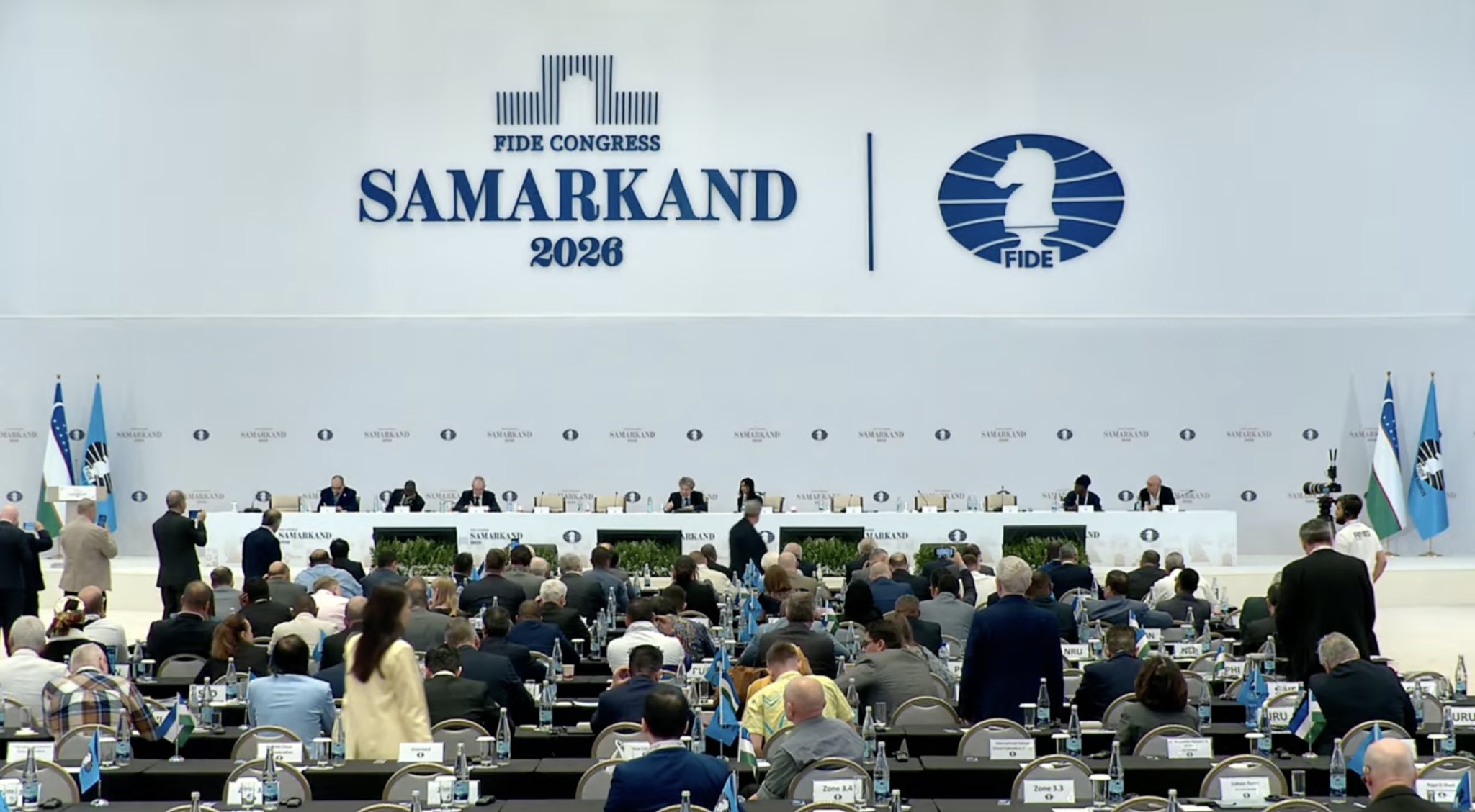
# Turlov Leads But Falls Short of FIDE Crown, Forces Runoff with Rosenstein
Timur Turlov could not close the deal on the first ballot. With 192 votes cast at the FIDE Congress in Samarkand on Saturday, the Russian businessman secured 96 votes to Wadim Rosenstein's 76, but neither candidate reached the 97-vote majority required to claim the presidency outright. Jan Henric Buettner's 20 votes eliminated him from contention, setting up a head-to-head runoff that will determine who leads world chess for the next four years.
This outcome transforms the second round into a genuine two-horse race. Turlov carries momentum into the runoff, having topped the first ballot, but his four-vote lead evaporates if Buettner's supporters consolidate behind Rosenstein. The German candidate has room to grow. Turlov's supporters, meanwhile, cannot afford complacency. A swing of just three votes in Rosenstein's favor would flip the outcome.
The stakes here extend beyond organizational politics. FIDE's president shapes competitive policy, arbitration standards, rating procedures, and the federation's financial priorities. After years of relative stability under Arkady Dvorkovich, the chess world now faces a genuine leadership change. Turlov, who built his career in finance and technology, has campaigned on modernizing FIDE's operations and expanding chess's digital reach. Rosenstein, a veteran administrator, emphasizes continuity and inclusive governance.
The first-round results reveal a fragmented electorate. No single candidate commanded overwhelming support. Turlov's 50 percent of votes cast shows he has a pathway to victory, but it also indicates that half the congress preferred alternatives. Rosenstein's respectable second-place finish keeps him alive, and the chess politics of the moment favor underdogs in runoff scenarios. Smaller delegations and swing voters often coalesce around the perceived challenger in a two-person race.
The timing matters too. This election occurs amid tensions over FIDE's handling of sanctions, online rating integrity, and the federation's financial transparency. Whoever emerges from the runoff inherits a restive membership expecting visible reform. Turlov's technology background appeals to delegates frustrated with FIDE's outdated systems. Rosenstein's experience navigates institutional complexity that outsiders sometimes underestimate.
The second ballot will occur within hours, likely Monday at the Samarkand congress. Both camps will spend the interval persuading Buettner's 20 backers and hunting for persuadable votes among the initial Turlov and Rosenstein supporters. Chess federations rarely flip positions between ballots, but it happens. Delegate conversations during breaks carry weight.
This runoff is no formality. The first-ballot results proved that. Turlov's four-vote advantage dissolves without active consolidation. Rosenstein's comeback path exists. The next vote determines FIDE's direction for years.