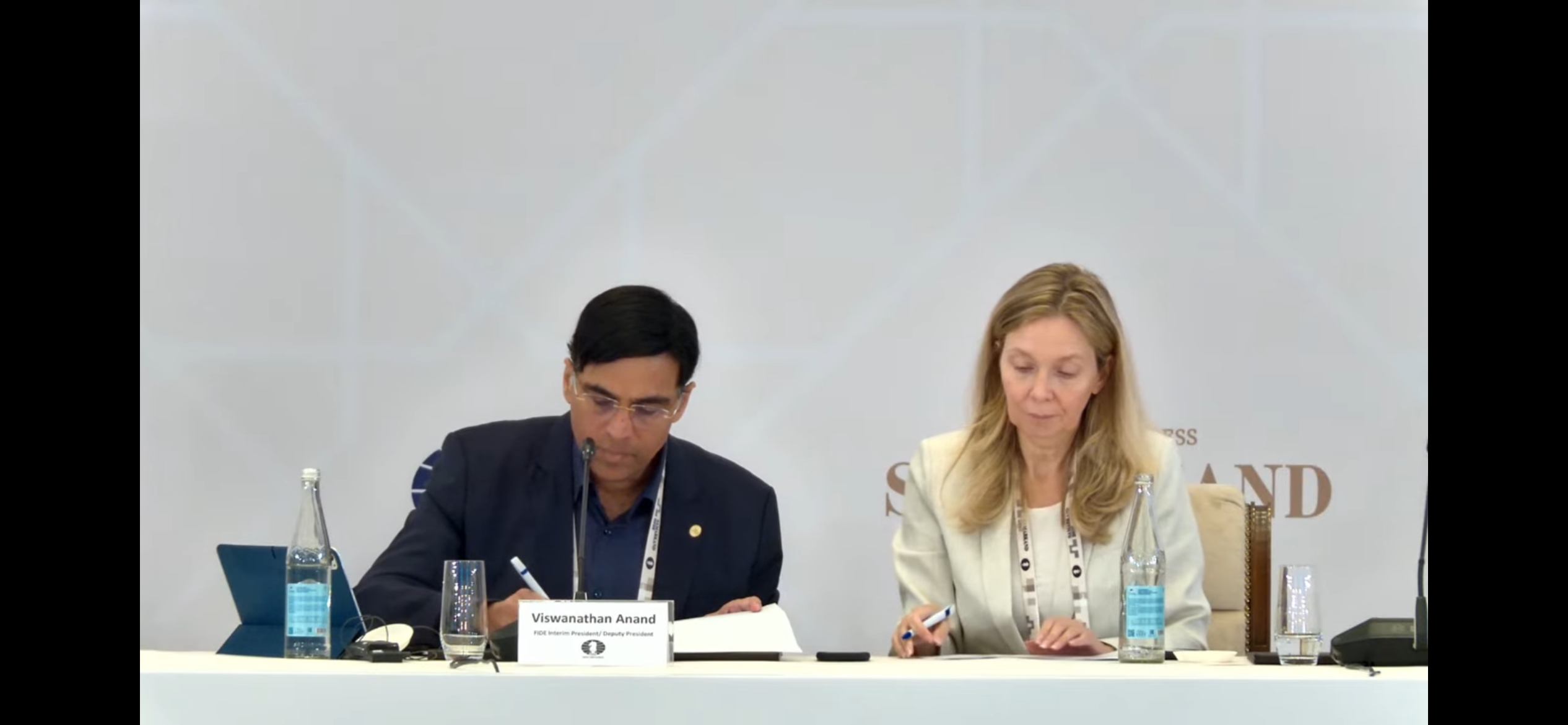
FIDE's newly elected president Timur Turlov didn't bother showing up to his own organization's General Assembly the day after winning office. Neither did most of the Council members he just brought in. The session collapsed immediately due to lack of quorum, with fewer than half the accredited delegates in attendance.
Peter Heine Nielsen, the Danish grandmaster who has made a career of criticizing FIDE's dysfunction, pulled no punches. "We are a joke of a democracy," he posted, and he's not wrong.
This is the governing body of world chess. Not a casual club. FIDE runs the World Championship, organizes the Olympiad, sanctions major tournaments, and sets the playing rules for the entire game. Yet it operates with all the institutional rigor of a pickup game.
The optics here matter more than people realize. Turlov just won a contested election. He needed legitimacy. The first move after victory is to show up, consolidate support, and demonstrate that the reform agenda he campaigned on actually has teeth. Instead, he was absent. So were his people. The signal this sends is that the position doesn't require his presence or attention.
This pattern runs deep in FIDE. The organization has limped through decades of governance failures. You see it in how often elections get contested, how many candidates operate under clouds of controversy, and how proposals that should be routine turn into political battles. The World Chess Federation should be boring. Good governance is invisible. Instead, FIDE generates constant drama, investigation, and argument.
David Llada, the former Chief Marketing and Communications Officer who ran for Council this cycle, would have seen this collapse firsthand. Former insiders know exactly how broken things are, which is why critical voices like Nielsen keep speaking up despite knowing it rarely changes anything.
What happens next matters. Turlov has limited time to establish credibility. A follow-up session will eventually convene, and delegates will expect their new president to be there. The Assembly needs to pass budgets, approve competition calendars, and ratify governance decisions. If Turlov treats these sessions as optional, the skeptics will be proven right about whether real change is coming.
For now, FIDE handed the presidency to someone and then immediately demonstrated it can't even conduct basic parliamentary business. That's not a controversy. That's just incompetence on display.