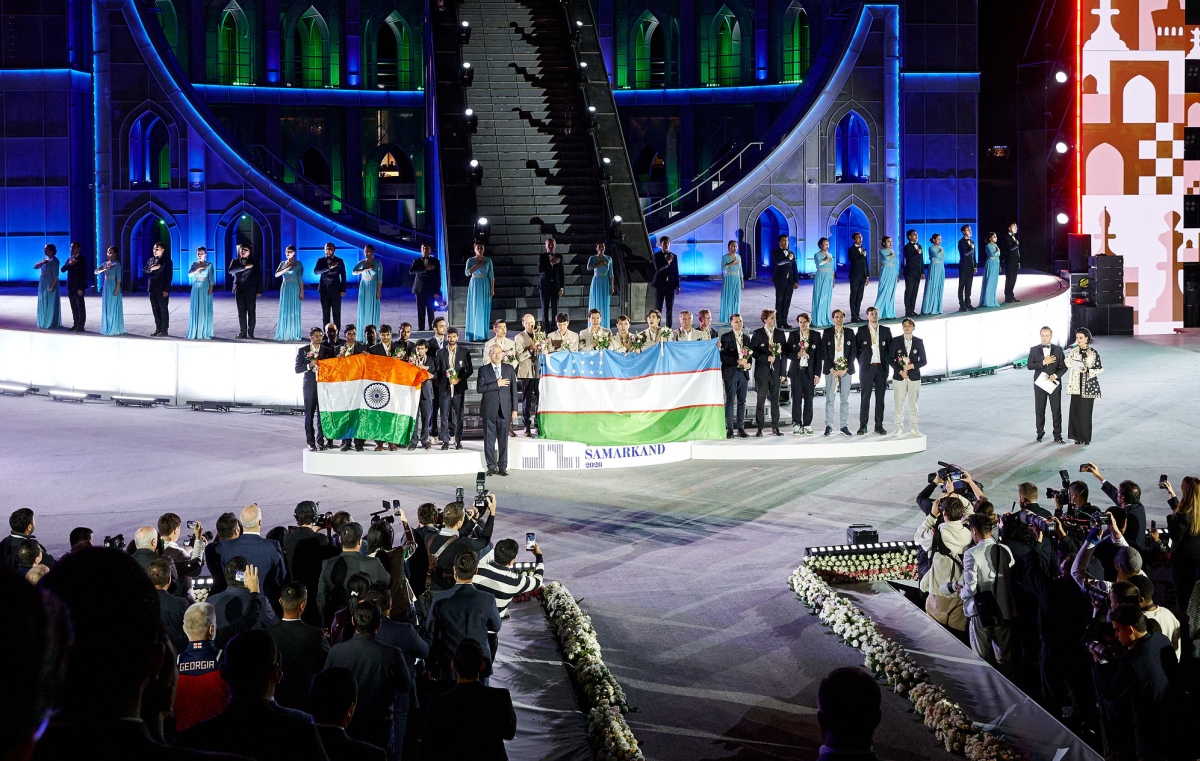
Nodirbek Abdusattorov proved why Uzbekistan crowned itself Olympiad champion. The 21-year-old took board one gold in Samarkand with a 2869 performance rating, a number that reflects pure dominance across eleven rounds. He didn't merely participate in his team's title run. He carried it.
This matters because board medals at the Olympiad separate the passengers from the engines. Team gold looks clean on a trophy. Individual golds expose who actually won the games when the pressure mounted. Abdusattorov's performance wasn't a surprise afterthought. It was the foundation that made Uzbekistan's team dominance possible.
Wei Yi claimed board two gold for China with a display of technical precision that kept his team competitive throughout. The distinction between top boards at an Olympiad is razor thin. Wei didn't outscore Abdusattorov by accident. Both players were running near 2870 performance levels, the kind of number that says you beat everyone you faced and converted every advantage.
What separates these individual medallists from the noise is consistency across eleven rounds. A single tournament win looks impressive until you stack it against a player who maintained that level against every opponent the Olympiad threw at them. Abdusattorov did that. Wei did that.
Frederik Svane rounds out the trio of board medals nobody seriously contested. The German player's board three gold carries particular weight because he exemplifies the role specialization plays in Olympiad dominance. Not every player peaks on the same board. Svane's comfort at three suggests Germany deployed him exactly where his preparation and style generated maximum return.
Here's what changes next: rating lists reflect individual games, not Olympiad performances, so Abdusattorov's 2869 showing will push his live rating upward if it hasn't already. A performance that dominant sticks. It matters when he sits down in January at his next super-tournament. Teams will study how he handled the pressure of board one. Opponents will prepare harder. That's the afterlife of an Olympiad gold medal for an elite young player.
The board medals also shape how nations evaluate their future Olympiad rosters. Abdusattorov's dominance tells Uzbekistan they built the right team. Svane's gold reminds Germany that flexibility in board assignments beats rigid adherence to rating order.
These weren't the flashiest tournament victories in chess. They were the most reliable ones.