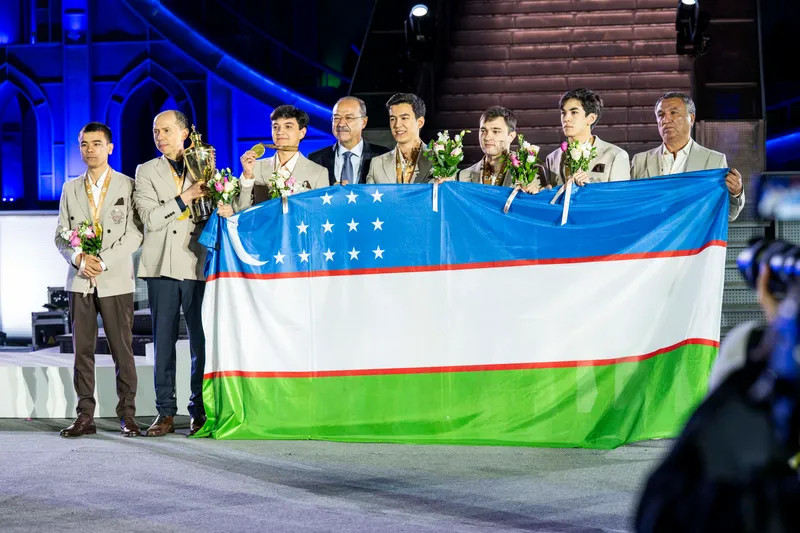
Uzbekistan won their second Chess Olympiad title on home soil in Samarkand, dispatching Ukraine 2½–1½ in a final round that decided which nation would stand atop the podium. The victory marks a return to Olympiad glory for the Uzbek federation after their first gold came in 2012, and this one carries the weight of playing for a home crowd in a nation with deep chess roots.
The final itself came down to margins. Ukraine brought fight to the match but fell short in a tense encounter. Nodirbek Abdusattorov anchored the team from board one, securing the individual gold medal on his board with a performance that reflected both technical excellence and the pressure of leading a championship team. For Uzbekistan, this wasn't just a team victory. It validated their investment in young talent like Abdusattorov, now 20, and proved they belong among the world's elite chess powers.
India claimed the silver medal after drawing Hungary in their final match, which meant they couldn't overtake Uzbekistan but held onto a podium finish. The Indian team showed consistency throughout the event, though they'll be disappointed not to convert superior positions into the title. Their young core remains one of the most promising in the world, with players like Gukesh and Praggnanandhaa continuing to elevate the program.
Germany's bronze brought celebration to a federation that hadn't won team hardware since 2000. That's a 24-year drought for one of chess's traditional powerhouses. Beating the Netherlands in the final round to secure third place suggests depth returning to the German squad. Individual medals went beyond national golds. Frederik Svane repeated his 2024 individual success by winning gold on his board again, demonstrating the consistency that separates good players from great ones in team events where every board matters across multiple rounds. Hungary's Gleb Dudin made a statement by rattling off five consecutive wins down the stretch, a performance that could reshape how scouts view his ceiling.
The Olympiad format rewards both team cohesion and individual brilliance. Players face different opponents each round, which means there's no hiding. You either execute or you don't. Abdusattorov's board one gold in front of his home fans carries psychological weight that extends beyond this tournament. He now has a major title at a young age when confidence compounds into future results.
What matters now is rating movement and qualification paths. Abdusattorov's individual gold strengthens his candidacy for top-level tournaments. Svane's repeat performance likely improves his rating and profile significantly, especially if he's knocking on the door of the world's elite. Germany's bronze might accelerate their investment in specific players who proved they could perform under Olympiad pressure.
The Uzbek victory reshapes the narrative around Central Asian chess. Tashkent has hosted tournaments before, but winning the Olympiad on home turf is different. It sends a message that the region's chess isn't dependent on imported expertise or guest appearances by world champions. The next Olympiad will be in Budapest in 2026, and the field will be watching what Uzbekistan does with this momentum.