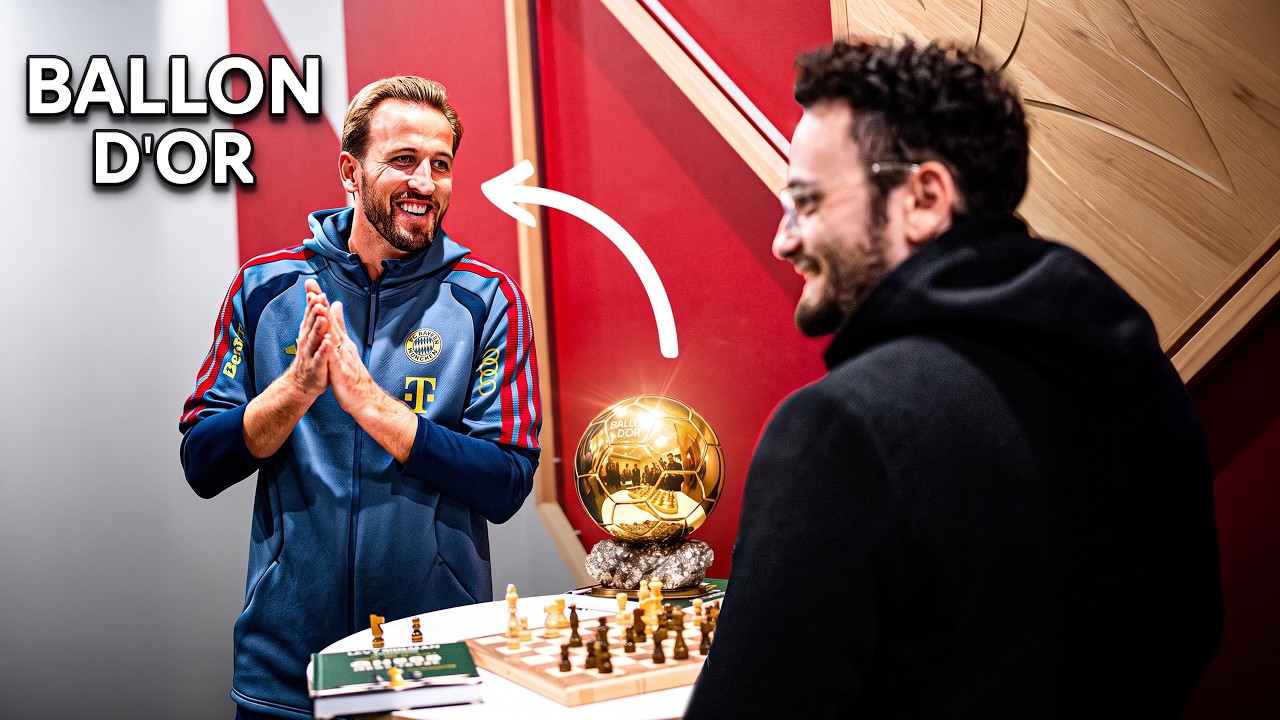
# GothamChess Takes on Bayern's Finest: When Soccer Met 32 Squares
Levy Rozman walked into Bayern Munich's facilities as Harry Kane was still basking in the glow of winning the Ballon d'Or. Two days after collecting soccer's most prestigious individual award, Kane sat down across from the IM known to millions as GothamChess for something completely different. Chess.
This wasn't some corporate photo op. Rozman, who has built a massive following by breaking down complex positions for casual players on YouTube, brought his chess expertise to test two of European soccer's elite talents. Michael Olise, Bayern's electric winger, joined Kane for the session.
The crossover works. Both sports demand pattern recognition, calculated risk, and the ability to see several moves ahead. Kane's success comes from reading defenses before they form. Olise thrives on anticipating defensive shifts. Put them in front of a chessboard and they're operating in unfamiliar territory, but the mental architecture transfers.
Rozman's visit taps into something real about chess's growth over the past five years. The game isn't confined to tournament halls anymore. It bleeds into streaming culture, celebrity culture, social media. When Magnus Carlsen loses to Hans Niemann, it trends on Reddit. When Andrew Tang wins a blitz tournament, clips circulate on TikTok. Now international masters are appearing in soccer stadiums.
This particular meeting lands at an interesting moment for Rozman. He's evolved from being primarily a content creator into someone with legitimate analytical credentials. His position on chess education and opening theory commands respect in the player community, not just the casual audience. That credibility is what makes him valuable in a setting like Bayern Munich. He's not there as a celebrity; he's there as someone who actually understands the game at a high level.
What's especially sharp about the timing: Kane just won the Ballon d'Or. His stock couldn't be higher. That Rozman and GothamChess secured access to film this moment speaks to how mainstream chess content has become. A soccer superstar at his peak sees value in the cross-promotion, in the content itself.
The match outcome matters less than the fact it happened at all. In 2015, an IM visiting a soccer club would've been novelty. In 2024, it's business. It signals that chess content creators operate in the same universe as professional athletes now, that the audiences overlap, that the engagement is mutual. Rozman didn't just play chess with Kane and Olise. He proved the audience for that encounter existed before the match even started.