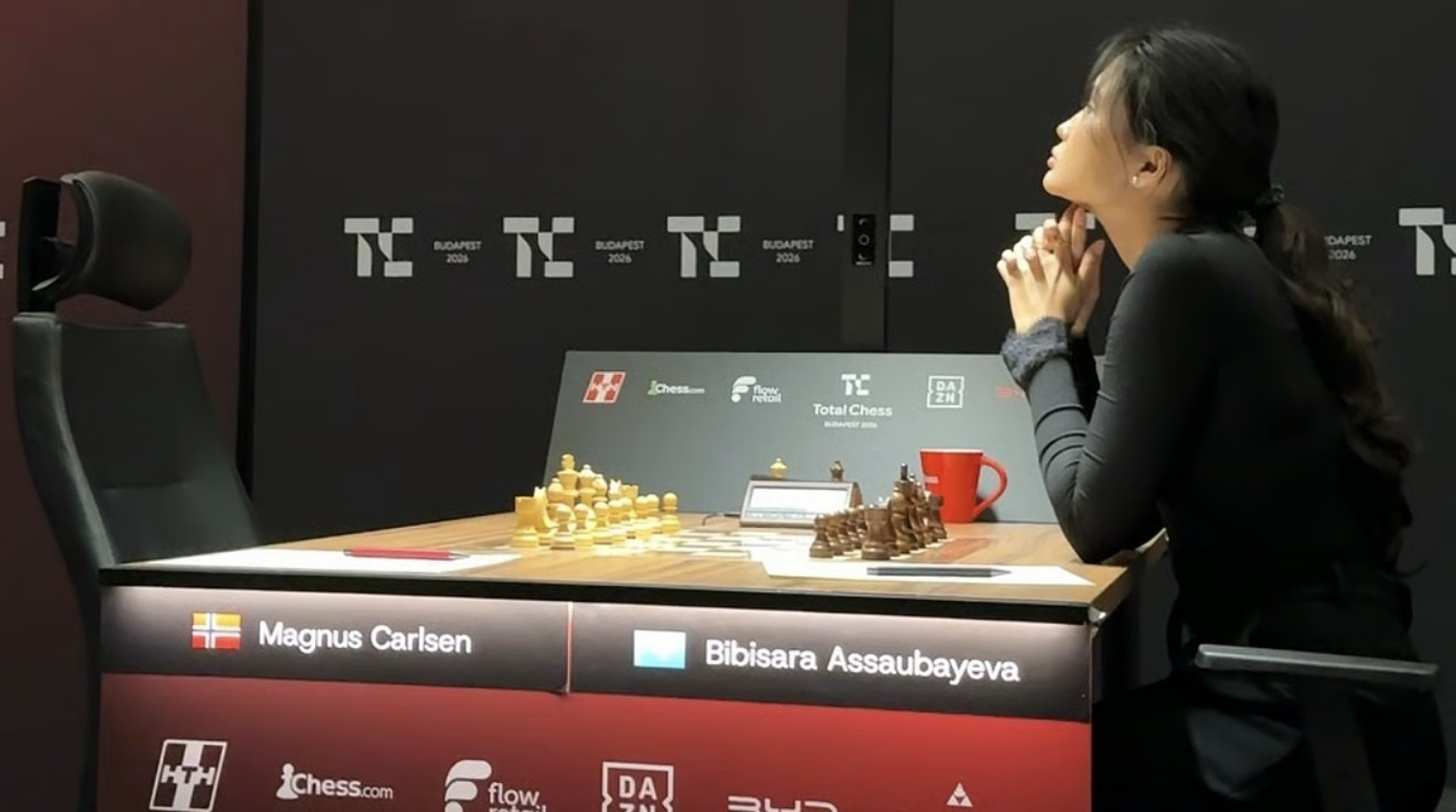
Magnus Carlsen walked away from a game he didn't need to play. The Fast Classic matchup against Bibisara Assaubayeva at Total Chess in Budapest was his to skip. He'd already secured the day with an 11.5-0.5 lead after blitz and rapid rounds. Assaubayeva sat at the board for 15 minutes before the arbiters handed her the win by default. What should have been a routine formality exploded into the tournament's biggest controversy.
The format is what matters here. Total Chess is a pilot event mixing speed formats across three days with daily points that reset. Each day's value is 20 points. The Fast Classic round was worth 8 of those. Carlsen had already clinched day one, so from a mathematical standpoint, the game had no bearing on his standing. He consulted the chief arbiter, explained his position, then left the playing hall.
The chess world split immediately. Evgeny Sutovsky and Hans Niemann branded Carlsen's withdrawal unsportsmanlike. The logic is straightforward: you show up for every game you're scheduled to play. That's the basic contract between a professional and an opponent. Assaubayeva deserved a chance to compete, not a walkover victory. The precedent matters too. If top players can exit games they view as meaningless, the format collapses.
Wesley So defended Carlsen's choice. The tournament structure itself invited the decision. If you've already secured the day's points, why risk a loss on an artificial deadline? This isn't a stroke play event where every stroke counts identically. Total Chess uses a novel scoring system that creates genuine scenarios where matches become irrelevant before they begin. Carlsen treated it like chess logic, not sportsmanship theater.
The organizers sided with Carlsen. They awarded the default to Assaubayeva but made no formal complaint and issued no fine. Their silence was an endorsement. They'd built a format that produced this exact outcome. The structure created the conditions. Blame the rules, not the player who exposed them.
This matters because Total Chess is meant to be chess's future laboratory. If the format generates these disputes in its opening weeks, the pilot has already revealed its fragility. You can't design a tournament system where the best players strategically forfeit games and call it healthy competition. Either the format changes to make every game consequential, or the sport accepts that professional players will optimize around point accumulation rather than the board.
Carlsen proved something about modern chess: players are analytical about more than tactics. They read tournaments like they read positions. They found the weakness in Total Chess's structure and exploited it. Whether that's brilliant or cynical depends entirely on where you stand on the unwritten rules of professional chess.