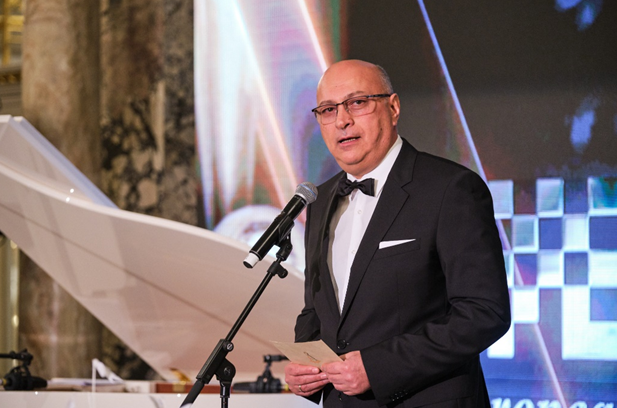
Zurab Azmaiparashvili fired back at Austria's power play within 48 hours, and his response cuts straight to the money.
On November 23, the ECU president sent a letter to member federations rejecting the legitimacy of Austria's coup attempt. He took aim at the two circulars circulating before an extraordinary General Assembly. Neither one, he argued, represents official ECU communication. Malcolm Pein's statement and Michael Stöttinger's (Austrian Chess Federation president) call for his removal do not speak for the union.
That matters legally and politically. If Austria wants to overturn Azmaiparashvili's leadership, it needs to follow proper procedure. A rogue circular, no matter how many federation presidents sign it, is not a vote.
But Azmaiparashvili went further. He made Austria's €4 million pledge the real issue. Where is the money coming from. Who are the sponsors. Does it come with conditions attached. Austria has dangled substantial funding as a carrot for change at the top of European chess. Azmaiparashvili's letter forces the conversation backward. Before federations decide whether to remove him, they need answers.
This is smart defensive chess. Austria floated the offer as a done deal, a gift that makes change irresistible. Azmaiparashvili reframed it as a question mark. Conditional money looks different than unrestricted support. If the four million comes with strings about ECU policy, tournament hosting, or federation autonomy, federations should know.
His letter also makes clear that no Vienna assembly has been formally approved yet. That stops Austria from treating a meeting as inevitable. The procedural ground remains contested.
The Austrian federation sees an opportunity to reshape European chess governance. It has resources and ambition. But it moved too fast, using back channels instead of open process. Azmaiparashvili exploited that mistake. He forced transparency on Austria's offer while questioning the legitimacy of the organizing effort itself.
The next move belongs to the federations. Some want change and see the money as proof that Austria takes the job seriously. Others will want those sponsor names and those conditions spelled out in writing. A few likely question whether a federation should use funding as leverage over union leadership at all.
This dispute will not settle on principle alone. It will settle on whether federations trust Azmaiparashvili or believe Austria's money and vision offer a better path forward. The letter bought him time and shifted the burden of proof onto his opponents. What comes next depends on how much Austria is willing to reveal.