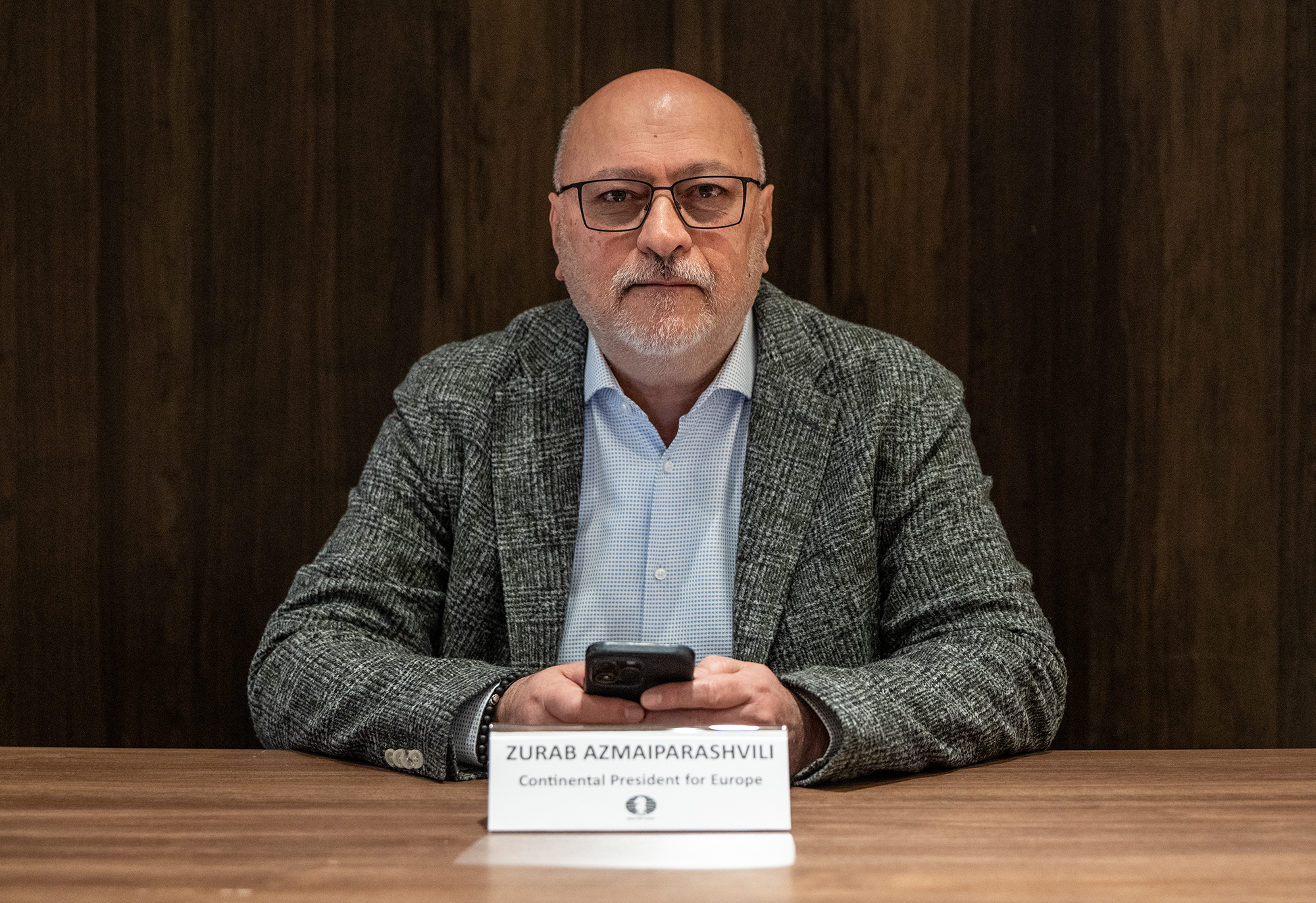
Zurab Azmaiparashvili fired a direct accusation this week: Russia is trying to hijack European chess through a €4 million sponsorship deal tied to leadership change at the European Chess Union.
The ECU President sent a statement to national federations alleging that FIDE President Timur Turlov dangled the money specifically to force out Azmaiparashvili and replace him with someone "loyal to the Russian authorities." Azmaiparashvili framed this as part of a broader Russian strategy to gain control of European sport.
This dispute cuts deeper than internal federation politics. It reflects the geopolitical fracture running through chess since Russia's invasion of Ukraine. FIDE, the world chess governing body, has struggled to balance its stated political neutrality with practical questions about Russian participation and influence. Turlov himself is a Russian oligarch with deep ties to the chess world, having made his fortune in cryptocurrency and poker before becoming FIDE President in 2021.
Azmaiparashvili's suspicion centers on the timing and strings attached to the sponsorship offer. A €4 million commitment sounds generous until you understand the condition: ECU leadership must change hands. That's not how legitimate sponsorships work. Real sponsors don't dictate internal governance. They support organizations that already exist.
The ECU President re-election occurred four months ago, so Azmaiparashvili holds a fresh mandate. Yet now he faces pressure to step aside anyway. The Austrian Chess Federation President Michael Stöttinger appears to be the preferred replacement candidate, though he hasn't publicly acknowledged this role.
What happens next matters for European chess's independence. If Turlov and his allies succeed in installing friendly leadership at the ECU, they gain leverage over Europe's largest chess population. Tournament hosting, federation policies, player rankings and opportunities all flow through that office. Control the ECU, control the continent's chess ecosystem.
The irony is sharp: chess prides itself on being a universal game that transcends borders and ideology. Yet the same geopolitical tensions poisoning international relations now poison chess governance. Russian players faced bans from many competitions following the invasion. FIDE walked a tightrope, hosting events where Russian athletes competed under neutral flags rather than national flags.
Azmaiparashvili's statement puts this conflict in public view rather than letting it fester in closed-door federation meetings. He's betting that transparency and national federation backing will shield him from removal. Turlov and his supporters now have to decide whether to escalate or accept Azmaiparashvili's continued leadership.
The chess world will watch closely. If Russia succeeds here, it signals that sporting governance structures remain vulnerable to oligarch pressure and geopolitical leverage.