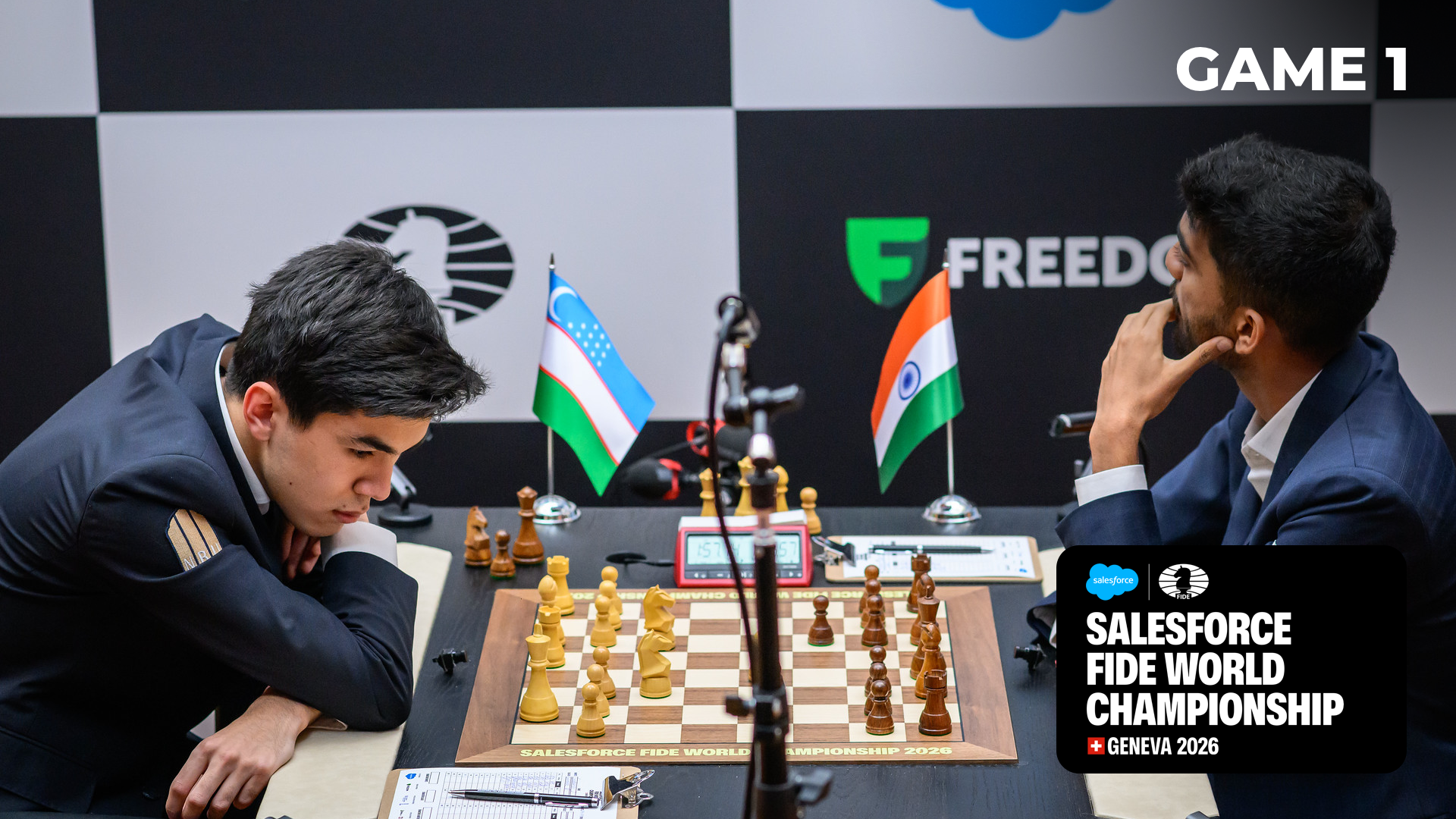
# Gukesh Holds Nerve Against Sindarov in Tense Championship Opener
Gukesh Dommaraju kept his title intact in game one of the Salesforce FIDE World Championship 2026, but it was closer than the draw suggests. Javokhir Sindarov pressed hard throughout a tense middlegame, creating real problems for the champion who had to defend precisely to avoid losing.
The opening phase went Sindarov's way. He steered the game into positions where his pieces coordinated better than Gukesh's, and the pressure mounted as moves accumulated. Clock time became a factor too. Gukesh faced the kind of match situation where a loss on move 25 would immediately shift momentum, but he found the defensive resources when it mattered most.
This is exactly the kind of game that shapes world championship matches. Sindarov didn't play poorly. He played well, created chances, and forced his opponent into uncomfortable positions. But Gukesh's experience at the highest level showed. The champion has played hundreds of rapid and blitz games against the world's elite; that training translates to practical defense under pressure in classical play. He found moves that weren't obvious, managed his time intelligently, and emerged with the draw that keeps the match balanced at 0.5-0.5.
What this tells us about the match dynamics: Sindarov is not an easy opponent. This is not a coronation. The 23-year-old from Uzbekistan has demonstrated he belongs at the championship level and possesses the technical skill to trouble even a reigning champion. Games like this one, where he creates winning chances but cannot convert them, are both encouraging and frustrating for his team. He's doing the right things; he's just not getting the result. That gap narrows over a 14-game match.
For Gukesh, holding from a difficult position is a solid outcome, but it's also a reminder that the title isn't his to lose anymore. He faces an opponent who can generate real threats, particularly in positions where his pieces achieve better coordination than the champion's. The classical game remains Gukesh's preferred format, but concentration lapses in complex positions can be costly in a world championship match.
The opening choices matter here. Sindarov's willingness to engage in a sharp, theoretical battle shows confidence in his preparation. He didn't come to defend or play for small advantages. He came to win, and that aggressive approach will likely continue throughout the match. Gukesh will need to decide whether to meet that aggression with his own or to shift toward positions that suit his style better. Early in a match, those decisions define the entire contest.
Game two comes quickly. Sindarov plays White, which means the initiative swaps hands. Gukesh will have the first chance to press, and his team will have scouted Sindarov's most dangerous tries with the first move. The champion has a reputation for taking advantage when White arrives; he won't want to repeat the passive role from game one.
The Salesforce FIDE World Championship format allows both players to show their full range across different opening systems and middlegame complexities. One game proves nothing about who will lift the trophy. But it does confirm that this match will be contested at the highest level, that neither player will hand over an advantage without a fight, and that the next 13 games will demand precision from both sides.
Gukesh's ability to survive game one positions him well heading into the opening segment of the match. Longer championships often reward patience and mental stamina over tactical brilliance. The champion demonstrated both. Sindarov proved he has the tools to threaten; now he needs the breakthrough. That's the story line heading into game two.