# Gaming's Unlikely Role in Olympiad Glory
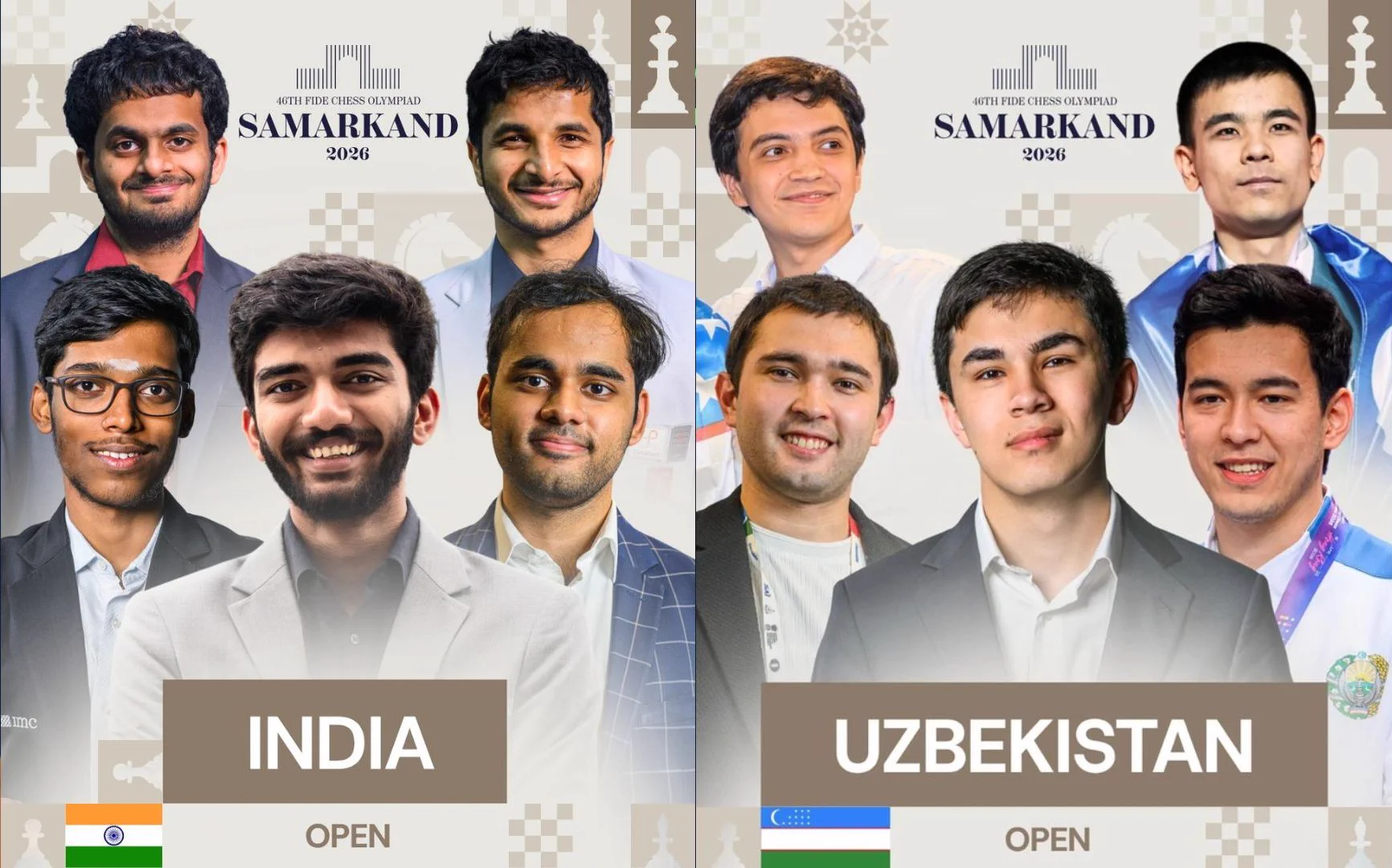
Nihal Sarin and Mukhiddin Madaminov returned from Samarkand with contrasting hardware. Sarin claimed silver for India's Open team. Madaminov won gold with Uzbekistan, his final-round victory sealing the title. Yet both players cited the same unconventional ingredient in their preparation: competitive video gaming, not chess study.
This isn't standard champion talk. When Sarin and Madaminov discussed their Olympiad runs separately after the tournament concluded, they leaned hard into gaming as a performance tool. Sarin, who ranks fourth on Chess.com's blitz leaderboard and ninth in bullet, treats gaming as routine rather than indulgence. He doesn't apologize for it. The approach works. His blitz credentials alone prove he's optimized something that most elite players treat as distraction.
The pattern reveals a generational shift. Younger grandmasters no longer compartmentalize chess as sacred study and everything else as wasted time. Sarin's gaming habit sits alongside his core preparation without tension. He's not choosing between chess and games. He's integrating both into a training ecosystem.
Why does this matter? Because top players train under extreme pressure to optimize every waking hour. Conventional wisdom demands chess books, engine analysis, and classical study until burnout arrives. If Sarin and Madaminov perform at Olympiad medal level while gaming routinely, the entire premise of traditional preparation warrants scrutiny. They're suggesting that mental recovery, reflexive decision-making under time pressure, and sustained competitive focus transfer between domains.
Gaming demands pattern recognition and rapid threat assessment under clock pressure. Both live in chess. A player grinding competitive multiplayer games develops the same high-speed intuition required for 3+0 blitz. That muscle doesn't atrophy when you shift to 90+30 classical. Sarin's bullet rank suggests his time management and pattern-spotting are finely calibrated. Those skills translate upward.
This also reflects accessibility. Sarin and Madaminov grew up with gaming as native infrastructure. They didn't graft it onto a chess-first training model. For them, gaming is ambient. It's how peers relax and compete simultaneously. Older prep orthodoxy treated anything non-chess as theft. Younger players see gaming as active recovery with competitive teeth.
The Uzbek and Indian medal performances at Samarkand carry an implicit message: elite chess no longer requires monastic devotion to the 64 squares alone. Players who maintain sharp competitive instincts through gaming alongside chess might outmaneuver those who treat every spare minute as study obligation.
Both Sarin and Madaminov proved it works. Their Olympiad medals aren't flukes built on gaming time. They're results achieved partly because of it. The old guard that preaches pure chess preparation should watch the leaderboards closely.