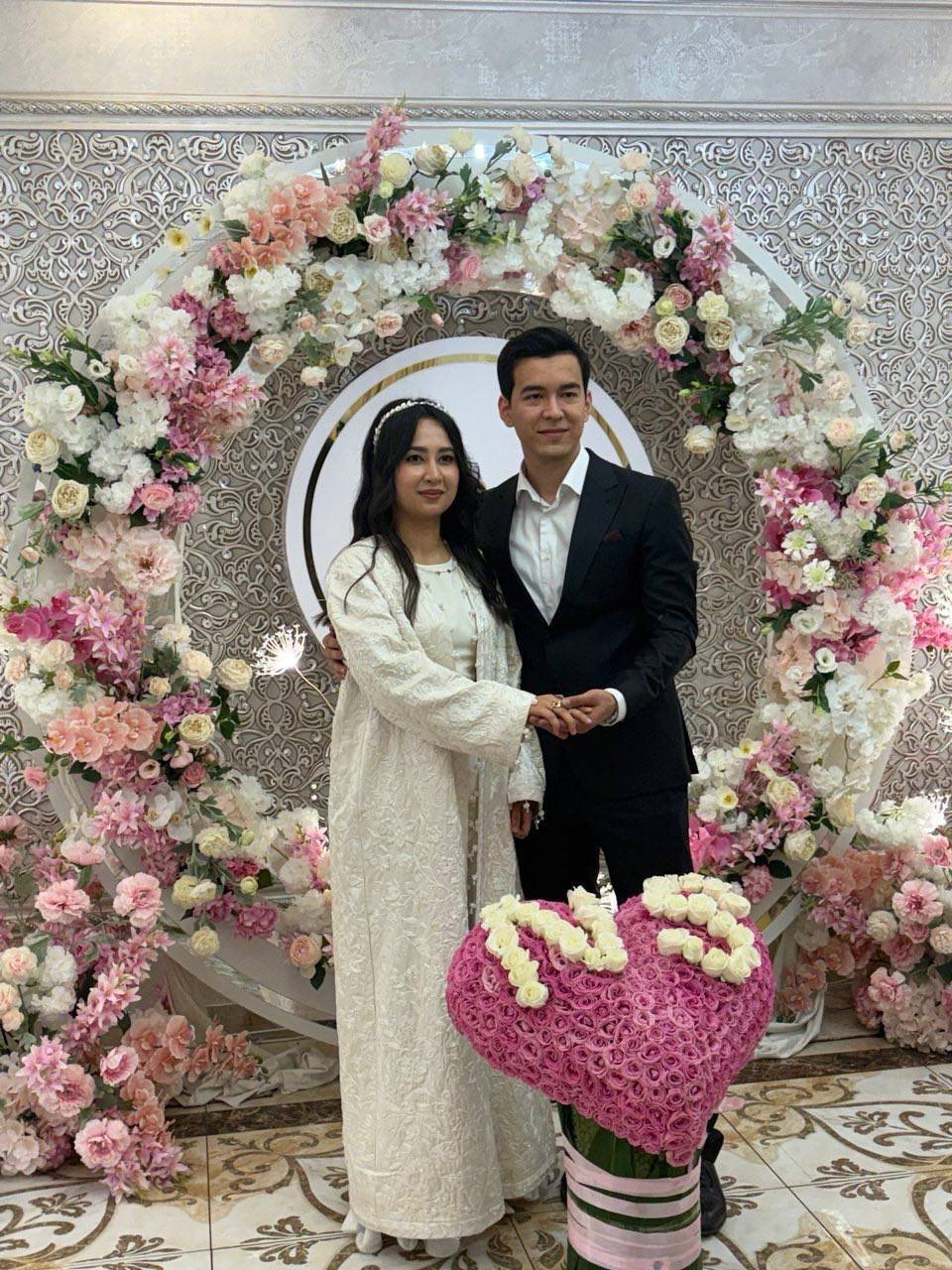
Nodirbek Abdusattorov got engaged last week. The Uzbek prodigy announced his engagement to Sevinch Mavlonova on October 4, one day after his country's team claimed gold at the 45th Chess Olympiad in Budapest.
The Uzbekistan Chess Federation posted a photo of the couple at a flower-draped engagement ceremony on social media over the weekend. The federation's caption didn't name Abdusattorov directly, but the timing and context made it clear. The 22-year-old has now confirmed the engagement himself.
This caps a banner year for Abdusattorov. He performed as board one for Uzbekistan's dominant Olympiad victory, helping Uzbekistan secure their second team gold medal in the event. Playing at the sport's most pressurized team setting, Abdusattorov delivered the performances his federation needed. The Olympiad runs on a condensed schedule with minimal preparation time between rounds. Board one players carry the highest expectations. That he played well enough to help win gold speaks to his form and mental toughness.
For Abdusattorov personally, the timing is significant. He turned 22 in January and has spent the year climbing the world rankings. He peaked at number 26 in the world in 2023 and remains a player coaches watch closely. The engagement marks a personal milestone for someone in the middle of building both a chess career and a life.
Uzbekistan's Olympiad gold was not a surprise to close observers. The team had talent on every board and a healthy federation supporting their preparation. Still, gold at the Olympiad remains chess's rarest team prize. Fewer than a dozen nations have ever won it. Uzbekistan joining that circle demonstrated their chess infrastructure works.
Abdusattorov's role in that victory elevated his profile. He plays sharp, tactical chess with confidence. His preparation is modern. He doesn't fear strong opposition. At board one, he had to face grandmasters from other medal contenders, and he held his own consistently.
The engagement adds a personal dimension to what has been a career-defining year. Abdusattorov entered 2024 as a rising young star from Central Asia with potential. He leaves it having won an Olympiad gold medal and having taken a major personal step. Both changes matter for how he approaches 2025.
His next major competitive target will likely be a world junior championship or a strong open tournament where he can continue climbing the rating list. The engagement doesn't change his chess trajectory, but it does mark him as someone settling into adulthood while still in the prime years for rapid rating growth. That combination, handled right, can produce a world-class player.