# Tamil Nadu Celebrates Olympiad Success with Rs 60 Lakh Prize Haul
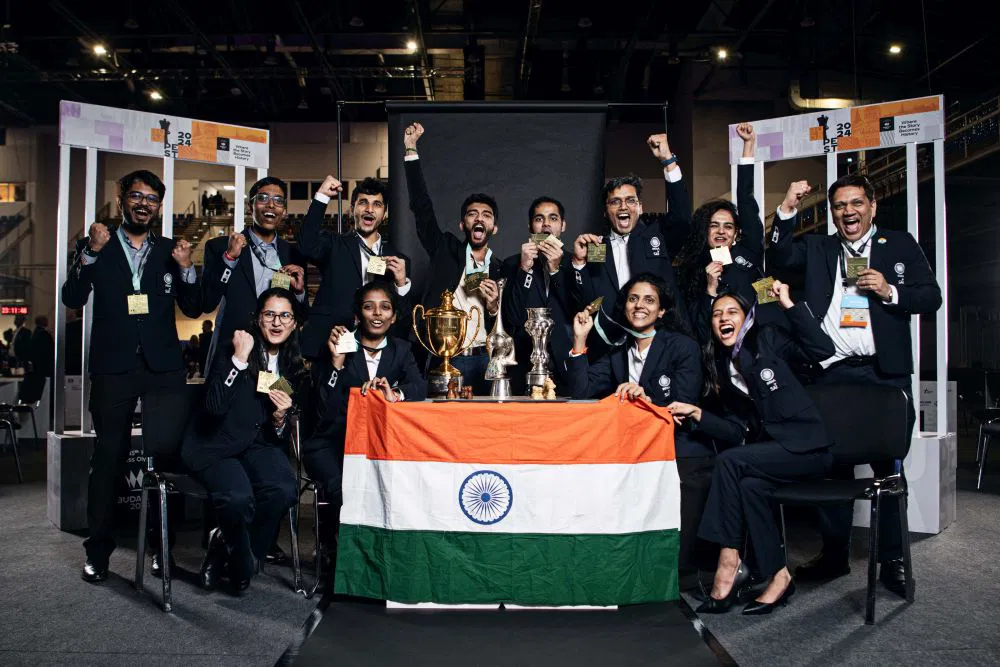
Tamil Nadu Chief Minister Joseph Vijay opened the state's coffers this week to reward its medal winners from September's Samarkand Olympiad. The ceremony handed out Rs 60 lakh across five award recipients, a recognition of India's strong showing at the biennial world championship.
Praggnanandhaa, India's highest-rated player, pocketed Rs 15 lakh for his individual bronze medal on the B board. The recognition arrived with additional honors from the state sports development authority, cementing his status as Tamil Nadu's flagship chess talent. Four other medal winners also received payouts, with two taking home Rs 15 lakh and three collecting Rs 10 lakh each.
The logistics proved slightly awkward. In two cases, relatives had to collect the cheques because the players themselves were absent from the ceremony. It is a common arrangement in Indian civic events where athletes travel immediately after competitions or remain on international circuits rather than waiting for local honors.
This matters because state-level support directly shapes India's chess pipeline. Tamil Nadu has emerged as a powerhouse in Indian chess over the past decade, producing not just Praggnanandhaa but also multiple junior talents who compete at the highest levels. Direct monetary rewards like these filter down through clubs and academies, encouraging younger players to pursue the game seriously. When a state government recognizes Olympiad medals with five-figure payouts, it sends a message to parents and kids alike: this investment pays dividends.
The Samarkand Olympiad itself validated India's consistent rise in competitive chess. The team performed well enough to warrant this level of celebration at home, where Praggnanandhaa's personal success received particular emphasis. His bronze on board B positioned him among the world's strongest junior players and kept him in the conversation for India's future world championship candidates.
Prize money for Olympiad success varies wildly by federation. Some nations pour resources into their teams; others provide minimal support. India's approach sits somewhere in the middle, with individual state governments and federations supplementing national backing. Tamil Nadu's Rs 60 lakh distribution suggests the state views chess as part of its broader sports infrastructure.
The next test comes at the next Olympiad cycle, where these same players will defend India's standing on the world stage. For now, Praggnanandhaa and company have tangible proof that domestic success translates into recognition at home.