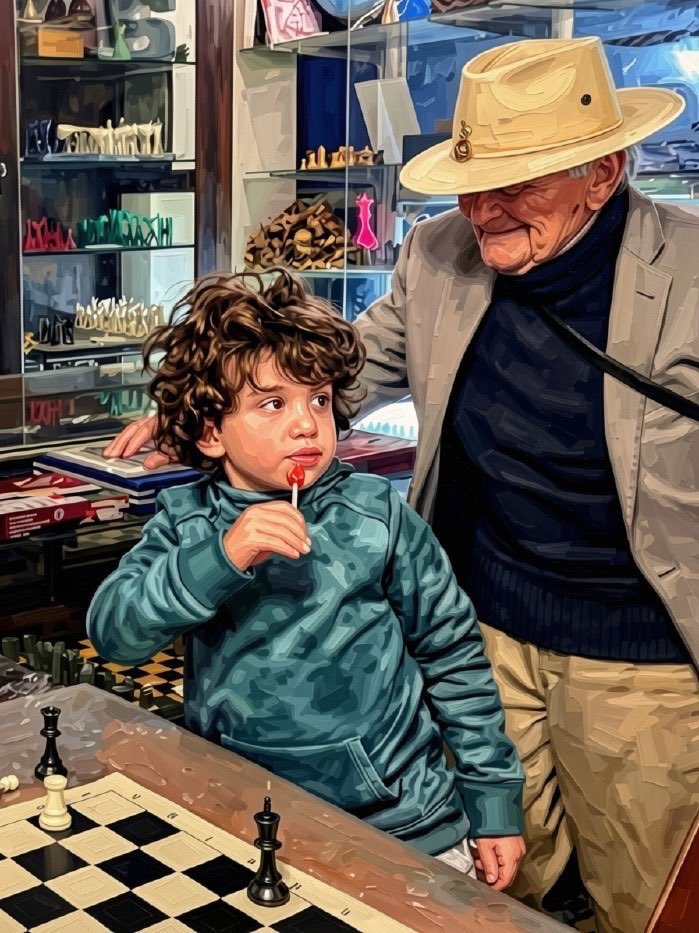
# The Doctor's Silent Reign Ends on New York's Concrete Boards
The Doctor is dead. The man who dominated Greenwich Village's street chess scene for decades, whose real name almost nobody knew and whose face was familiar to thousands, has died at 104. Chess Forum confirmed it this week. David Llada, the chess writer who tracked the city's rapid-play culture closely, learned the news from the shop and passed it along.
For someone so visible on New York's chess tables, the Doctor cultivated perfect anonymity. That was his legend. Players would arrive at Washington Square Park or drift into Chess Forum seeking the old master who could take on six opponents simultaneously and leave them all shaking their heads. Few knew his actual name. Fewer still knew anything about his life away from the board.
This is the paradox that made street chess in Manhattan work for so long. The best players became myths. The Doctor wasn't just good. He was the standard against which every ambitious rapid player measured themselves. You proved something when you beat the Doctor. You learned something when he dismantled you in eighteen moves.
Street chess in New York operated on reputation alone. There were no ratings published, no tournament records kept in official databases. A player's legend grew through word of mouth, through the stories people told in chess shops and over blitz games. The Doctor accumulated that reputation over seventy or eighty years of play. He showed up. He won. He moved on. No interviews. No fanfare. No explanation of his methods.
Llada's mention of the Doctor over the years reflected something the chess community had largely forgotten about its own history. Before the internet standardized how we consumed chess, before engines made engine lines the only acceptable way to analyze, street chess was the game's real laboratory. Men like the Doctor developed their intuition through thousands of rapid games played under pressure with real money sometimes on the line. They learned calculation through repetition, not through computer feedback.
The Doctor's death marks the end of an era for New York street chess. The tables are still there. Players still gather. But the continuity has broken. There's no living link now to the era when New York's chess culture was genuinely independent from the tournament circuit, when the best minds played the game for its own sake on public squares.
The city's chess community will add him to its folklore. The mysterious master. The player nobody could quite figure out. The old man who played forever and won more than anyone should have been able to. It's the only memorial street chess gets, and it's the only one the Doctor would have wanted.